
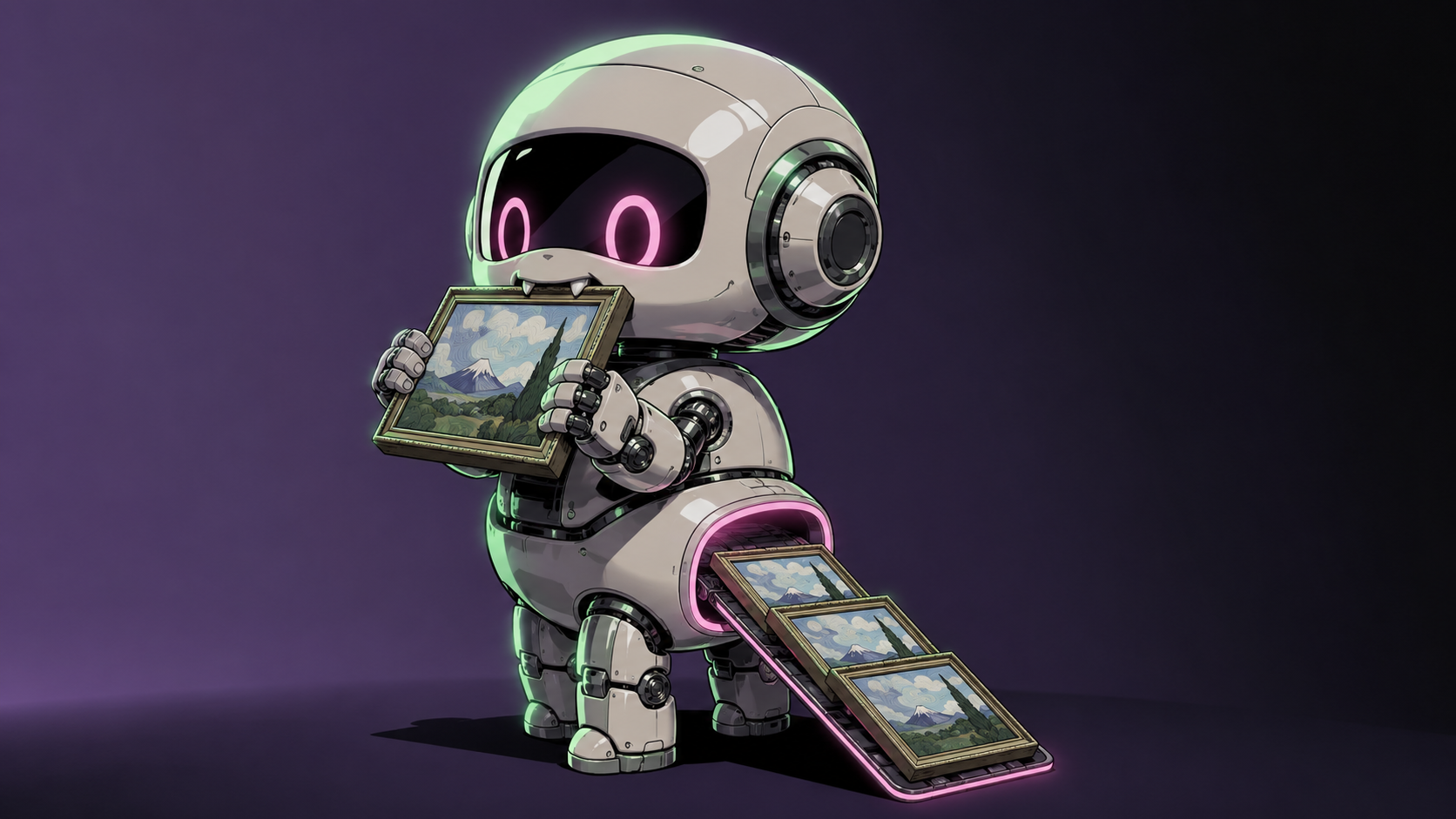
AI design sameness is becoming the design world's version of a tell. Once you notice it, you cannot unsee it: the same bright hero section, the same three bullet mission statement, the same four box grid explaining what an organization does. A recent New Yorker piece traced this pattern to Claude Design, the AI web design tool Anthropic launched this year, but the underlying problem is bigger than one tool. AI design sameness is not a style. It is the absence of one.
Last month a nonprofit client forwarded me a homepage mockup a board member had put together with an AI design tool over a weekend. It had the rounded hero section, the pastel gradient, the three punchy bullet points under the mission statement. I opened two other nonprofit sites I had bookmarked for research that same week and found the identical layout, different logo, same bones. Nothing about the page said who the organization actually was.
What the New Yorker piece got right
The article profiled a designer named Matt Strom-Awn, who noticed two unrelated startup clients had brought him pitch decks that looked like they came from the same design department. Both had a bright mission slide with three bullets. Both had a four rectangle slide mapping the market. Both ended with a slide titled "our move." Strom-Awn described the tool as defaulting to "the same aesthetic for every single person" who uses it. That is not a knock on the technology's competence. It is a description of what happens when thousands of organizations hand their visual identity to the same set of defaults.
AI does not start from a blank page
People talk about AI design tools like they are a neutral starting point, a blank canvas that speeds things up. They are not. These tools are trained on huge volumes of existing design work, and that training produces an opinion. It has a preferred color logic, a preferred spacing rhythm, a preferred way to break up a homepage into sections. That opinion shows up whether or not you asked for it. So when an organization uses one of these tools without a strong point of view of its own, they are not getting a blank page. They are getting somebody else's design opinion, applied at scale, to everyone else who used the same tool that week.
Why this hits mission driven organizations harder
A for profit startup can lean on funding, name recognition, or product to stand out even with a generic deck. A nonprofit, a wellness practice, or a climate advocacy group usually only has trust and distinctiveness to work with. Donors and grant reviewers see dozens of organizations a week. A site that looks like every other AI generated site reads as interchangeable, and interchangeable is a hard sell when you are asking someone to believe your mission is the one worth funding.
There is a quieter cost too. Organizations built around a specific community, culture, or cause often have visual language worth protecting, colors, imagery, and tone that come from the people they serve, not from a template library. Default AI layouts flatten that out in exchange for speed.
What a human designer still brings to the table
A trained tool can produce a competent layout in seconds. It cannot sit across from your program director and understand why your organization's tone needs to be blunt instead of polished, or why a donor page for a domestic violence shelter needs a completely different visual register than one for a youth robotics program. That kind of judgment comes from listening, from knowing the difference between what looks good and what is right for this specific audience, and from being willing to make an unconventional choice because it serves the mission rather than the template. AI tools optimize for the average of everything they have seen. A human designer optimizes for the one organization sitting in front of them.
Fast and generic, or considered and specific
AI tools are genuinely useful for drafts, brainstorming, and getting unstuck. The mistake is treating the first output as the final one. A homepage built entirely from AI defaults will always look like every other homepage built the same way, because the tool is optimizing for competent and fast, not for one organization's voice. Custom design work still starts where good design always has: who the audience is, what makes this organization different from the ten others doing similar work, and what story the site needs to tell before anyone reads a word of copy.
Want a website that looks like your organization, not like everyone else's AI default homepage?