
Brand Mission Trust Sells
There is a certain kind of company that builds its entire identity around doing the right thing. The materials are sustainable. The carbon footprint is calculated and offset. The packaging is compostable. The founders give interviews about supply chain ethics. The product costs more, but you feel okay about that because you are voting with your wallet. You are part of something. Brand mission trust is respected by all.
When Brand Mission Trust is Purpose Washed
And then the numbers stop working, and the mission evaporates overnight.
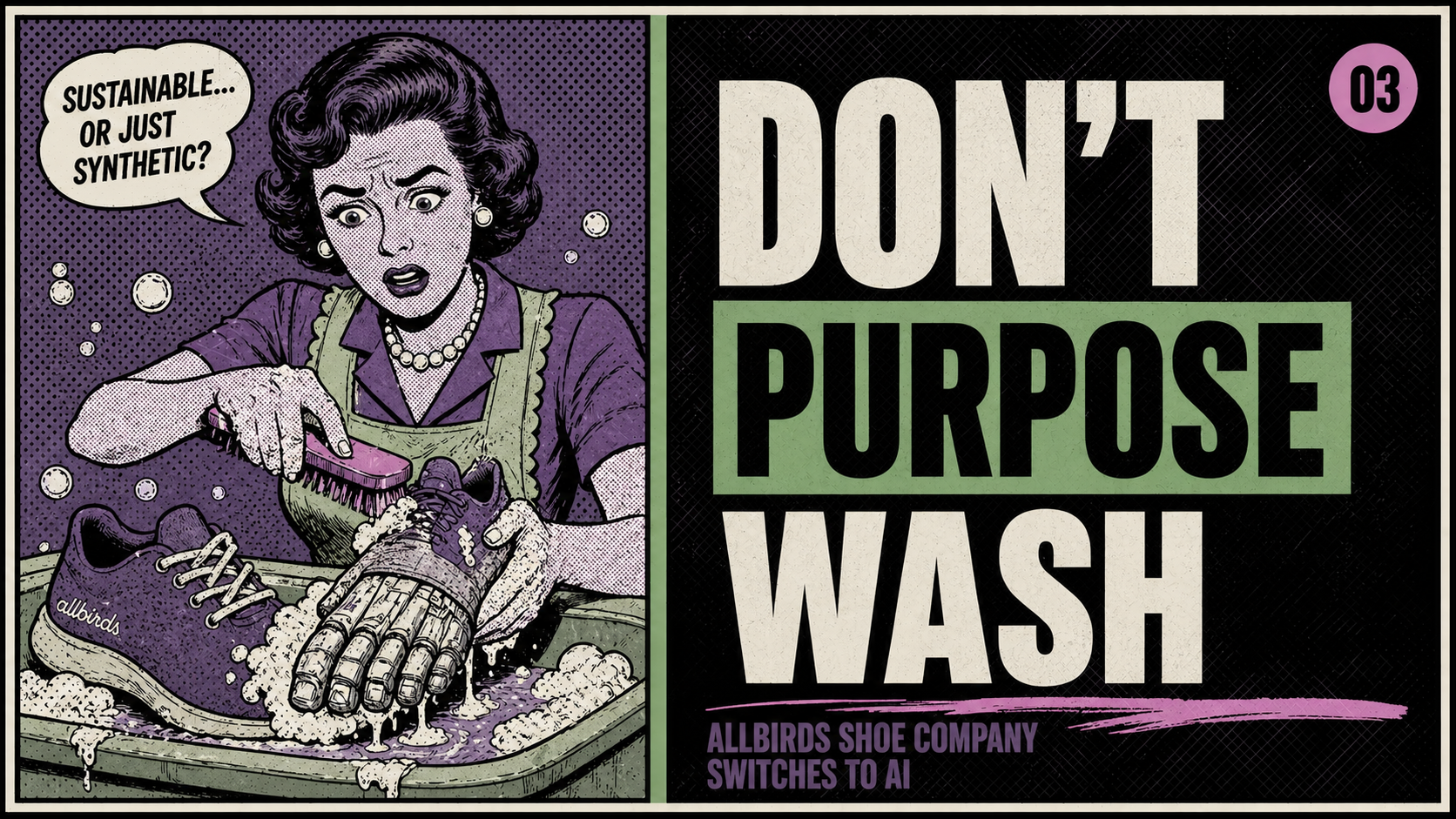
Allbirds -- the sneaker that once ruled Silicon Valley -- is pivoting away from footwear entirely, rebranding as "NewBird AI" to focus on compute infrastructure. The Allbirds brand and footwear assets are being sold to American Exchange Group. As part of that move, the company is asking shareholders to approve a charter amendment to remove references to being operated for the environmental conservation public benefit.
Let that settle for a moment. Not a quiet pivot. A formal, legal removal of environmental commitment from the company charter.
I remember the first time I noticed Allbirds shoes on a shelf at a boutique fitness studio. The person behind the counter explained -- unprompted -- that they were made from merino wool, had a lower carbon footprint than traditional sneakers, and that the company published its environmental impact score on every product. It felt like proof that you could run a real business and actually care. That framing did a lot of work. It built a customer base that felt like a community.
What we are watching now is the unwinding of that exact thing.
The problem is not that Allbirds failed. Companies fail. Markets shift. Pivots happen. The problem is what this particular failure reveals: when a brand's values are primarily a marketing strategy, they are the first thing to go when the model breaks. Sustainability was not the core of the business -- it was the positioning. The moment that positioning stopped delivering returns, it became a liability to be removed from the charter.
Liza Moiseeva, chief marketing officer at Commons -- an app that rates brands on sustainability -- called the pivot something that "belongs in an Onion article." Her family owns ten pairs of Allbirds. That detail matters. These were not casual customers. They were believers. And believers, when let down, do not quietly move on. They become the loudest voices in the room.
This is the specific cost of purpose washing that does not get discussed enough: it does not just damage one brand. It raises the skepticism threshold for every brand that comes after. When a company that built its entire identity on environmental commitment can walk away the moment AI compute looks more profitable, it makes it harder to trust the next company that shows up with compostable packaging and a carbon offset calculator.
The lesson here is not cynicism. It is clarity. Consumers -- especially in the nonprofit, wellness, and social impact sectors -- are getting sharper at asking what is structural versus what is marketing. Is the environmental mission written into the governance of the organization? Is it embedded in how decisions get made when things get hard, not just when things are going well? Or is it a story told to build an audience?
Allbirds answered that question in an SEC filing.
For organizations that are actually mission-driven -- not mission-adjacent -- this moment is an opportunity. The bar is getting reset. The distinction between a company that is green and a company that is genuinely structured around environmental benefit is becoming legible. That clarity is useful, even if the reason it exists is frustrating.
Trust is not a campaign. It is a record. And records have a way of being read. So, walk the talk.